
For those who walk the path of Yoga, the search for inner coherence is constant. At the center of this journey is Ahimsa, non-violence. Many of us adopt vegetarianism or veganism motivated by this compassion. However, a silent conflict arises within the home: how to reconcile my ethical vows with the diet of a carnivorous pet?
Often, we try to ignore this discomfort, but if we want to evolve, we need to face our dilemmas honestly.
1. Their Dharma is not ours.
The first step is to separate the wheat from the chaff. The Dharma (nature and duty) of a dog or cat involves predation; they do not possess human moral free will. However, the issue here is not veterinary, but ethical: to what extent should I, as a Yoga practitioner, be a link in the chain of industrial slaughter of other beings?
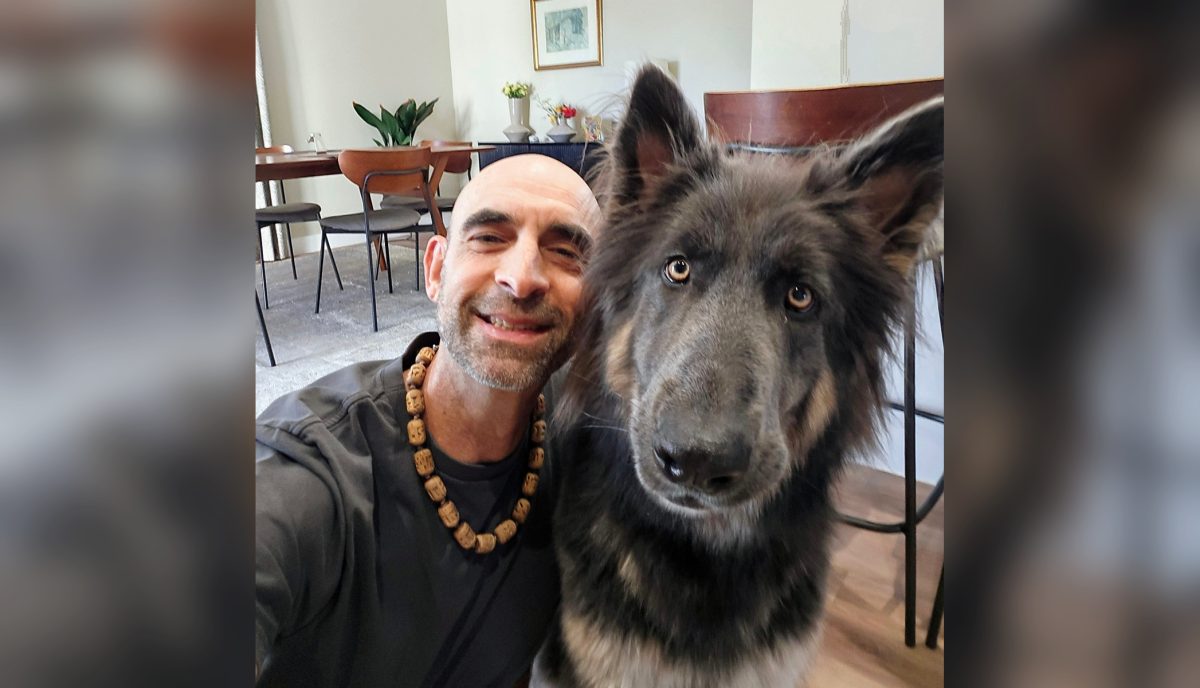
- Dogs: The solution here is simple. I have my own dog, who is super healthy and has always been vegan. Vegetarian and vegan dogs are, in many cases, healthier than those that consume meats.
- Cats: The scenario is more difficult, but not impossible. There are already vegan cat foods formulated for them, and cats are natural predators. For example, I had a cat that adopted us at Paraíso dos Pândavas that received vegan food and supplemented its diet by hunting on its own. The important thing is our role: we don’t need to be the providers of industrial slaughter.
2. The Illusion of Compassion
We need to be direct: loving one animal at the cost of destroying others is not true compassion. Killing one being to help another is not a real solution; it’s merely a speciesist privilege.
When we buy meat-based animal feed, we finance the death of cows, pigs, and fish, in addition to contributing to the destruction of entire biomes—such as the Amazon and the oceans, devastated for pasture and by overfishing. We cannot “sweep the problem under the rug” and pretend that this systematic death is not in our hands.
A common point of resistance arises when an animal “appears at our doorstep.” Many believe the choice is binary: either I take it in and buy meat-based food, or the animal dies. This reasoning is flawed for two reasons:
First, we are not Atlas; we cannot carry the world on our shoulders. Every day, we overlook the suffering of beggars, those struggling with addiction, devastated biomes, and entire nations at war. We do this because we understand—even if unconsciously—that we do not have the Dharma to care for every single ill on the planet. The path of Yoga requires us to take on what we can take on in a way that aligns with our values. If caring for one animal requires me to kill other innocent animals, it becomes clear to me that this is not my duty.
Second, helping does not necessarily mean adopting and feeding. We can exercise our compassion in ways that do not violate our principles, such as financing spay and neuter campaigns or investing in educational awareness campaigns.
3. The Fog of the Gunas: Why does this topic generate anger?
Whenever I share these teachings, I receive attacks, even from students. Why so much resistance and aggression? The answer lies in our internal psychology as described in Yoga:
- Mastering Kama: When desire (Kama) and sensory habits take over, emotions interfere with the use of logic and we lose focus on Dharma.
- The Vision under the Gunas: Under the influence of Rajas (passion and agitation), sometimes we see duty, sometimes we get lost. Under Tamas (ignorance and inertia), we see everything reversed—we call error “right” and violence “care”.
- Distorted Intelligence: When we are dominated by these forces, intelligence takes a back seat or is completely distorted to justify the unjustifiable. We cannot think clearly because the mind is too busy protecting our comfort.
4. The Path of Responsibility
Ahimsa relates to our actions and our free will. If you already have this duty of caring for a pet, accept that you are in a conflicting situation and seek solutions. The crucial point is: if we are already on the spiritual path, we should not voluntarily assume the duty of caring for a carnivorous pet. And, if we already have one, we should ideally not personally involve ourselves in killing other animals.
One important detail: it’s okay if others give meat to our pets. What others do is their own business, using their free will. Our focus is on not getting directly involved in the killing process.
5. Conclusion: Our Extended Family
I recognize that this is a deeply touching subject. Our pets are members of our family; their well-being is a legitimate emotional priority. However, Yoga invites us to expand this perspective.
We cannot forget that we have a larger family as Earthlings. The cow that dies to become animal feed, the fish that is taken from the ocean, and the biome that is destroyed are also part of this web of life to which we belong. Expanding our compassion beyond the walls of our home is the true challenge of Ahimsa.
If there is no immediate perfect solution, be patient. But do not deny the conflict. In Yoga, we learn that Truthfulness and Non-violence are two of the four fundamental pillars of Dharma. When we lie to ourselves to justify choices that cause suffering to other beings, we cause both pillars to crumble simultaneously. The true spiritual journey begins when we have the honesty to align our vision with reality, accepting that our responsibility is to life in all its forms.